

Digital and email marketing help businesses stay connected with current customers while reaching new people online. A strong strategy can build trust, increase website traffic, support sales, and keep your brand top of mind.
For businesses in Raleigh, Wake County, and throughout North Carolina, email remains one of the most direct ways to share useful information, promote services, announce special offers, and encourage customers to take the next step.
Unlike a social media post that may disappear from a customer’s feed, an email is delivered directly to their inbox. When it provides real value, email marketing can help turn casual readers into loyal customers.
What Is Digital and Email Marketing?
Digital marketing is the use of online channels to promote a business, service, product, or event. It can include websites, search engines, paid ads, social media, video, content marketing, and email campaigns.
Email marketing is a type of digital marketing that uses email to communicate with potential customers and current customers. Businesses use it to build brand awareness, share updates, promote offers, nurture leads, and encourage repeat business.
GO Media provides digital and email marketing services that focus on strategic planning, thoughtful campaign design, audience understanding, personalization, testing, and ongoing optimization.
Why Email Marketing Still Matters
Email marketing gives businesses a direct line of communication with people who have chosen to hear from them. These subscribers may be customers, leads, event attendees, website visitors, or people who signed up for updates.
Because the audience has already shown interest, email can be an effective way to share helpful content and encourage action. It can also support other marketing efforts by bringing people back to your website, service pages, online store, event registration page, or contact form.
Key Benefits of Email Marketing
- Direct communication: Your message reaches a customer’s inbox instead of competing only in a crowded social media feed.
- Stronger customer relationships: Helpful and relevant emails can build familiarity and trust over time.
- Repeat business: Campaigns can remind existing customers about your services, products, promotions, and upcoming events.
- Measurable performance: Businesses can review opens, clicks, website visits, purchases, leads, and other campaign activity.
- Flexible content: Emails can promote a sale, share an article, introduce a team member, announce an event, or provide useful tips.
- Support for other channels: Email can help increase traffic to website pages, blog posts, social media accounts, and landing pages.
How Email Marketing Supports Local SEO and GEO
Email marketing does not directly change a business’s Google rankings. However, it can support a stronger overall local marketing strategy by bringing qualified people back to your website and encouraging them to engage with your business.
For local businesses, sending readers to helpful pages about services, communities served, events, promotions, and customer resources can increase visibility with the people most likely to become customers.
For example, a Raleigh home-service company could send an email about seasonal maintenance tips and link to a service page. A healthcare practice could share patient education and link to a local treatment page. A retailer could announce a new product and guide subscribers to the related online product category.
When email, website content, local SEO, social media, and paid advertising work together, businesses can create more consistent brand visibility online and offline.
Types of Email Campaigns Businesses Can Use
The best email campaign depends on your audience and your goals. A restaurant may need to promote weekly specials, while a professional service company may need to educate prospects before they are ready to contact the business.
Welcome Emails
A welcome email is sent after someone joins your email list. It introduces your business, explains what subscribers can expect, and gives them a reason to stay connected.
A strong welcome email may include:
- A short introduction to your business
- Your most helpful service, product, or resource
- A first-time offer or next-step invitation
- Links to your website and social media profiles
- A clear way to contact your team
Promotional Emails
Promotional emails help businesses share sales, special offers, seasonal discounts, new products, and limited-time opportunities. These campaigns should make the value clear quickly.
Examples include:
- “Schedule Before Friday and Save 15%”
- “New Menu Items Are Here”
- “Early Registration Is Now Open”
- “Book Your Fall Service Appointment”
- “Shop Our Weekend Sale”
Educational Emails
Educational emails provide useful information that helps readers solve a problem or make a better decision. This type of campaign is helpful for businesses with longer sales cycles, specialized services, or complex products.
Examples may include:
- Seasonal home maintenance checklists
- Frequently asked questions about a service
- Customer care tips
- Buying guides
- Local event guides
- Advice from your business team
Educational content can build trust because it gives readers value before asking them to make a purchase or schedule an appointment.
Newsletter Emails
A newsletter helps businesses stay in touch on a regular schedule. It may include company updates, new blog posts, customer stories, recent work, employee highlights, upcoming events, and useful seasonal information.
Consistency matters more than sending too often. A monthly newsletter can work well for many businesses because it gives the audience a predictable update without overwhelming their inbox.
Re-Engagement Emails
Re-engagement emails are sent to subscribers who have not opened or clicked emails in a while. The goal is to remind them why they signed up and invite them to reconnect.
A simple re-engagement message could say, “Still interested in local marketing tips and special offers? Update your preferences to receive the content that matters most to you.”
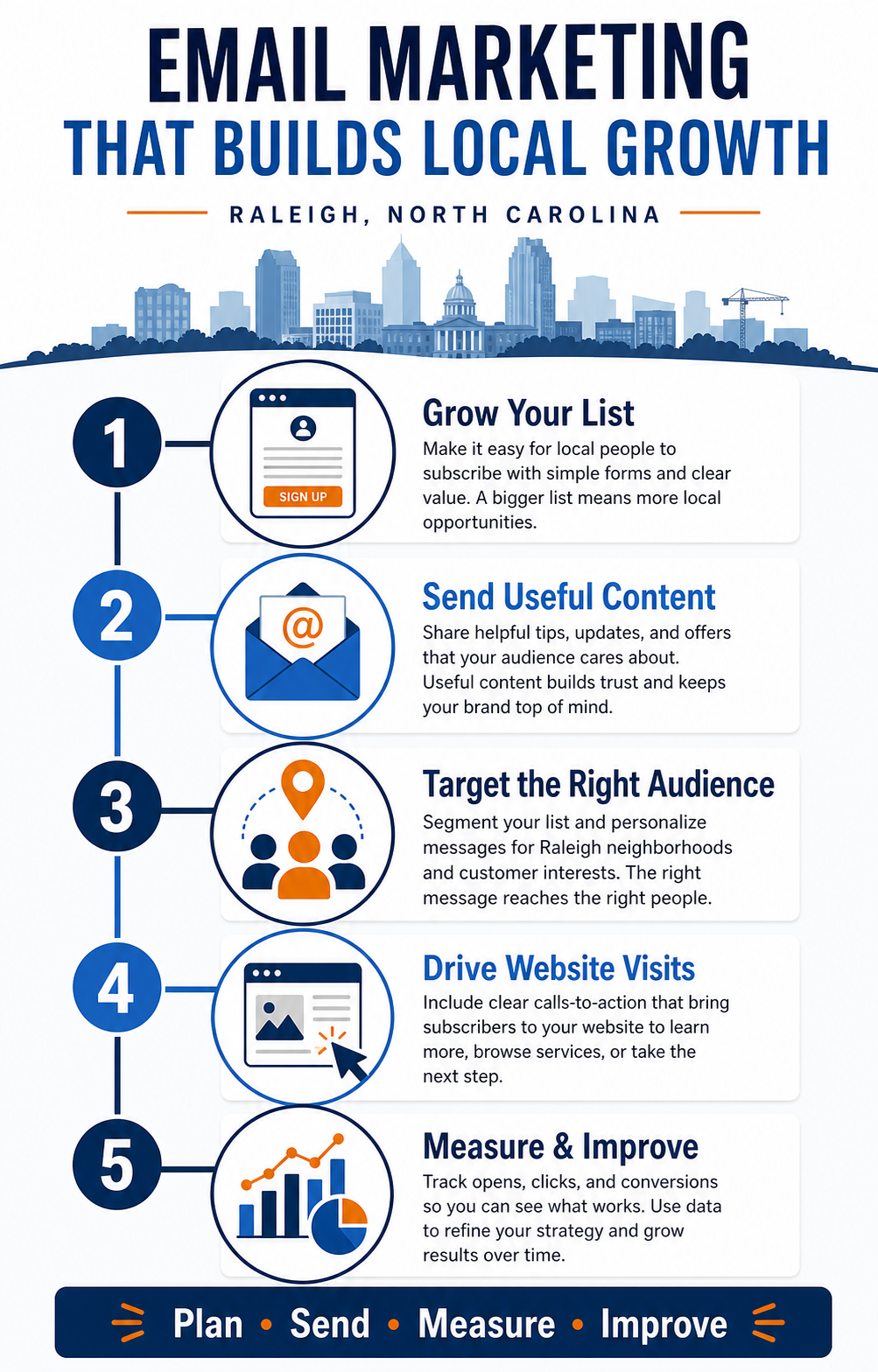
How to Build a Better Email Marketing Strategy
Successful email marketing starts with a plan. Sending random emails without a clear purpose can make it harder to earn attention and build customer trust.
Start With a Clear Goal
Each email campaign should have one primary purpose. That purpose may be to increase website visits, generate phone calls, promote an event, encourage purchases, book appointments, or share useful information.
Choose one main goal before writing the email. This makes it easier to create a clear message and call to action.
Know Your Audience
Not every subscriber needs the same message. A new lead may need introductory information, while a longtime customer may respond better to loyalty offers, product updates, or helpful tips.
Audience segments can be based on location, past purchases, services used, interests, customer status, or email activity. This allows businesses to send more relevant messages.
Create a Marketing Calendar
A marketing calendar helps businesses plan emails in advance. It can include holidays, local events, seasonal service needs, product launches, sales, company announcements, and blog content.
Planning ahead helps prevent rushed campaigns. It also makes it easier to coordinate email with other marketing efforts, such as SEO, website content, social media, advertising, video, and graphic design services.
Write a Strong Subject Line
The subject line is often the first thing a subscriber sees. It should be simple, clear, and connected to the email’s actual content.
Good subject line examples include:
- “Your Fall Home Maintenance Checklist”
- “A New Way to Save This Week”
- “Raleigh Event Updates You Need to Know”
- “Is Your Website Ready for More Local Leads?”
- “Book Your Appointment Before the Holiday Rush”
Avoid subject lines that are misleading, overly vague, or written only to create urgency. The goal is to earn trust, not just short-term clicks.
Use One Clear Call to Action
Every email should guide readers toward a next step. That action may be visiting a webpage, calling your business, scheduling a consultation, making a purchase, downloading a guide, or registering for an event.
Keep your main call to action easy to find. Use direct phrases such as “Schedule Your Consultation,” “Shop the Sale,” “Read the Full Guide,” “Get Event Details,” or “Request a Quote.”
Email Design Tips That Improve Readability
Most people read email on a phone. That means each campaign should be easy to scan on a smaller screen.
- Use short paragraphs and clear headings.
- Choose large, readable text.
- Use high-contrast colors between text and backgrounds.
- Place the most important message near the top.
- Use images that support the message instead of distracting from it.
- Make buttons large enough to tap on a mobile device.
- Use one main call to action per campaign.
- Test every email before sending it to your full audience.
How Often Should a Business Send Emails?
There is no one schedule that works for every business. The right frequency depends on what your audience expects and how often you have useful information to share.
Many local businesses start with one or two emails per month. Retailers, restaurants, event organizers, and media brands may send more often when they have regular promotions, events, or new content.
The most important rule is to send emails that are useful. If every message is focused only on selling, subscribers may stop opening or unsubscribe. Balance promotional emails with educational content, helpful updates, and local information.
How to Measure Email Marketing Results
Email marketing works best when businesses review results and make improvements over time. Tracking performance can show which topics, offers, subject lines, and calls to action connect with your audience.
Important email marketing metrics include:
- Open rate: The percentage of recipients who open an email.
- Click-through rate: The percentage of recipients who click a link in the email.
- Conversion rate: The number of subscribers who complete a desired action, such as making a purchase, booking an appointment, or filling out a form.
- Unsubscribe rate: The percentage of subscribers who choose to stop receiving emails.
- Website traffic: The number of visitors who arrive on your website from an email campaign.
- Revenue or leads: The sales, calls, form submissions, or appointments connected to a campaign.
Testing is also important. Businesses can test subject lines, send times, images, calls to action, and content topics to learn what produces stronger results.
Common Email Marketing Mistakes to Avoid
Even a well-designed email can underperform if it is not relevant, useful, or easy to read. Avoid these common issues when planning campaigns.
- Sending emails without permission from the recipient.
- Writing long blocks of text without headings or clear sections.
- Using too many calls to action in one email.
- Sending every subscriber the exact same message.
- Using unclear subject lines that do not match the email content.
- Forgetting to test links, buttons, images, and mobile formatting.
- Only sending promotional messages and never providing helpful information.
- Ignoring campaign data and failing to improve future emails.

Build a Stronger Digital Marketing Strategy With GO Media
Email marketing can help your business create stronger customer relationships, encourage repeat business, and drive traffic to the pages that matter most. The best campaigns combine useful content, clear design, audience targeting, and ongoing testing.
GO Media helps businesses create tailored digital and email marketing strategies that support their overall marketing goals. Campaign planning, content creation, creative design, testing, personalization, and optimization can all work together to create a better customer experience.
Whether you want to announce a new service, promote an event, grow customer loyalty, or generate more leads, a strategic email campaign can help you stay connected with the people who matter most to your business.
Frequently Asked Questions
What is email marketing?
Email marketing is a form of digital marketing that uses email to communicate with potential customers and current customers. Businesses use it to share updates, promote offers, build customer relationships, and encourage website visits, sales, bookings, or other actions.
Why is email marketing important for local businesses?
Email marketing helps local businesses stay connected with people who have already shown interest in their products or services. It can support repeat business, promote local events and offers, increase website traffic, and keep a business top of mind in its service area.
How often should a business send marketing emails?
The right email schedule depends on your audience and the type of information you have to share. Many local businesses start with one or two emails each month. The most important goal is to send useful, relevant content instead of emailing too often without a clear purpose.
What should be included in a marketing email?
A marketing email should include a clear subject line, a helpful or relevant message, simple design, and one main call to action. Depending on the campaign, it may also include an offer, event details, a product or service link, a helpful resource, or a way to contact the business.
Can email marketing help with SEO?
Email marketing does not directly improve Google rankings. However, it can support SEO by sending interested readers to helpful website pages, service pages, blog posts, event pages, and local resources. This can increase qualified website traffic and support a stronger overall marketing strategy.
What is a good email marketing call to action?
A good call to action clearly tells the reader what to do next. Examples include “Schedule Your Consultation,” “Request a Quote,” “Shop the Sale,” “Read the Full Guide,” “Get Event Details,” and “Book Your Appointment.”
How can a business measure email marketing success?
Businesses can measure email marketing results by tracking opens, clicks, website visits, form submissions, phone calls, purchases, bookings, and unsubscribe activity. Reviewing these results helps improve future subject lines, content, offers, send times, and calls to action.