
 Social media gives local businesses a way to meet customers where they already spend time online. A thoughtful strategy can help your brand build awareness, earn trust, answer questions, share helpful content, and bring more people to your website or location.
For businesses in Raleigh, Wake County, and across North Carolina, social media marketing can support growth by keeping your company visible between customer visits. Influencer marketing can add another layer of trust by introducing your business through people whose audiences already value their opinions.
Success is not only about gaining more followers. The best social media campaigns focus on reaching the right people, providing useful content, creating real engagement, and encouraging actions such as website visits, calls, appointments, purchases, and event registrations.
What Is Social Media Management?
Social media management is the process of planning, creating, publishing, and reviewing content for a business on social platforms. It also includes responding to comments and messages, maintaining a consistent brand voice, tracking results, and adjusting the strategy over time.
A social media manager helps a business stay organized and active online. Instead of posting only when there is a sale or event, the business follows a content plan built around its audience, services, goals, and local market.
GO Media provides social media and influencer management for businesses that want to strengthen their online presence, increase engagement, build brand awareness, and work toward measurable marketing goals.
What Is Influencer Marketing?
Influencer marketing is a partnership between a business and a content creator who has built trust with a specific audience. An influencer may create posts, videos, stories, reviews, event content, or other social media content that introduces followers to a product, service, event, or brand.
Influencers are not always celebrities. For many local businesses, the best partner may be a Raleigh-area food creator, fitness professional, parent creator, real estate professional, community leader, local photographer, or niche expert with an engaged audience.
The right influencer should have an audience that matches your ideal customer. A smaller creator with a local and active audience can often be more valuable than a large account with followers who do not live in your service area or have an interest in your business.
Why Social Media Matters for Local Businesses
Many customers use social media to discover new businesses, compare options, look for reviews, check business hours, view products, and see what a company is like before reaching out.
Social media also gives businesses an opportunity to show the people behind the brand. Customers often connect with businesses that feel helpful, responsive, local, and real.
Benefits of Social Media Management
- Improved brand awareness: Regular content helps more people recognize your business and remember what you offer.
- Stronger customer trust: Helpful posts, quick responses, and real customer stories can make a business feel more credible.
- More website traffic: Social posts can direct followers to service pages, blogs, event pages, product pages, and contact forms.
- Local audience reach: Location-based content can help your business connect with people in Raleigh, Wake County, and nearby communities.
- Better customer engagement: Comments, messages, polls, and questions create opportunities to start conversations with potential customers.
- Support for sales and leads: A clear strategy can encourage bookings, purchases, quote requests, phone calls, and event registrations.
How Social Media Supports SEO and GEO
Social media does not directly determine where a business ranks in Google search results. However, it can support a broader local marketing strategy by increasing brand visibility, driving visitors to helpful website pages, and helping potential customers learn more about your business.
For local SEO and geographic marketing, social media can highlight the cities, neighborhoods, events, and communities your business serves. This helps create clearer local relevance for real people who are looking for products and services in their area.
For example, a Raleigh restaurant could share posts about seasonal menu items, local events, and community partnerships. A home-service company could publish maintenance tips for North Carolina weather conditions. A healthcare practice could share patient education and link to service information for people in Wake County.
Social content works best when it connects with a complete marketing system that includes a well-built website, useful service pages, local content, search engine optimization, email marketing, paid advertising, and strong customer service.
Social Media Platforms for Businesses
The right platform depends on your business, audience, goals, and type of content. You do not need to be active everywhere. It is often better to manage a few channels well than to post weak content across every platform.
Facebook can work well for local businesses because it supports community engagement, event promotion, business updates, customer communication, photos, videos, and local advertising. It is often useful for service businesses, restaurants, retailers, nonprofits, healthcare practices, and community-focused brands.
Instagram is highly visual and can be a strong platform for businesses that can show products, team members, completed work, events, customer experiences, before-and-after results, food, fashion, design, travel, fitness, and lifestyle content.
LinkedIn is useful for professional services, business-to-business companies, recruiting, leadership content, company news, industry insights, and relationship building with other professionals.
TikTok and Short-Form Video
Short-form video can help businesses reach new audiences with quick, useful, entertaining, or behind-the-scenes content. Videos can show how a product works, answer common questions, introduce staff members, share local tips, or highlight an event.
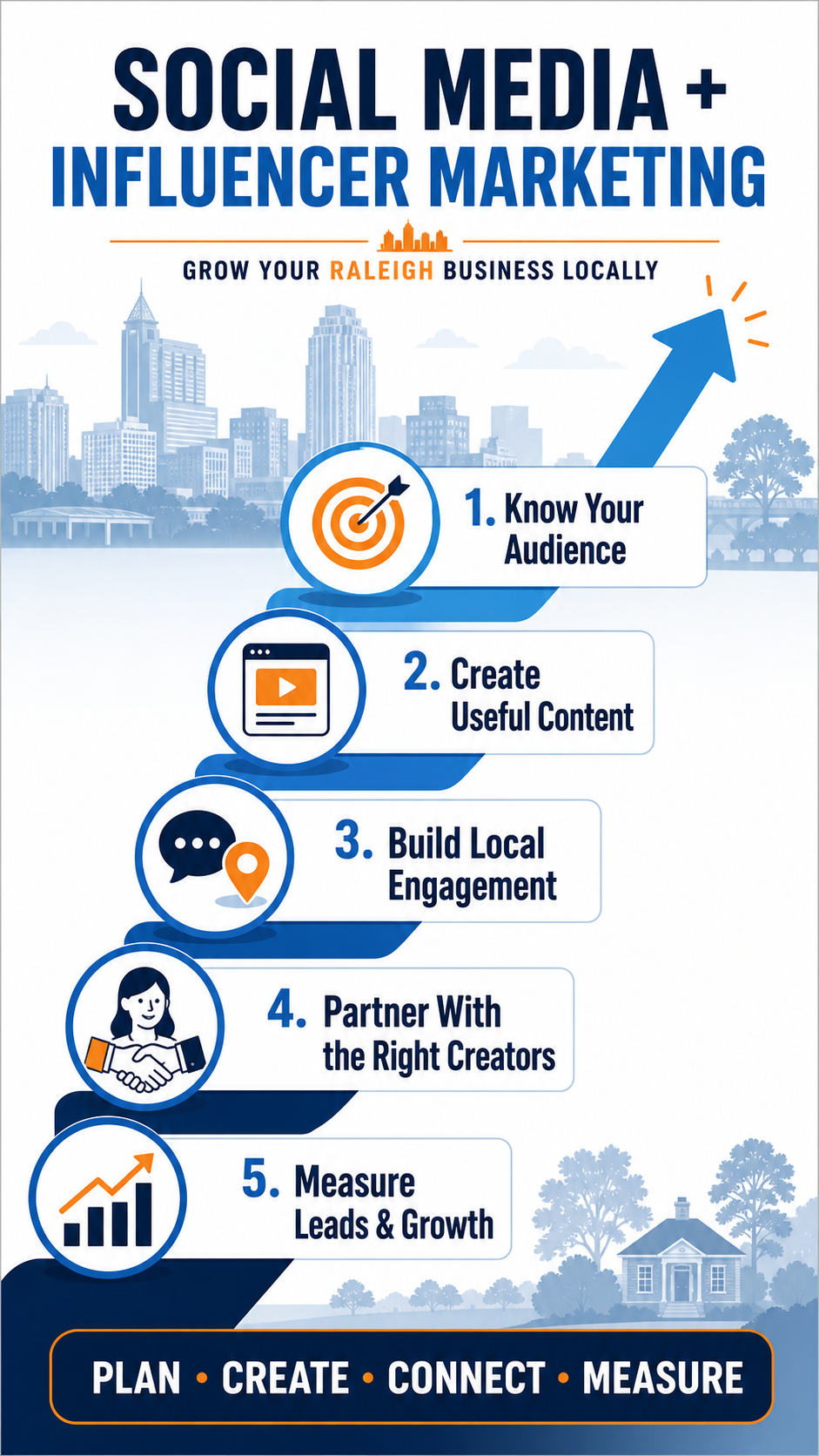
Types of Social Media Content That Build Engagement
A strong social media strategy includes more than sales messages. The goal is to create content that gives people a reason to follow, engage, remember your brand, and take action when they need what you offer.
Educational Content
Educational content answers common customer questions and provides useful information. It can help your business become a trusted source in its industry.
Examples include:
- Quick how-to tips
- Frequently asked questions
- Seasonal checklists
- Product or service explanations
- Common mistakes to avoid
- Local guides and community resources
Behind-the-Scenes Content
Behind-the-scenes content makes your business feel more personal. It can show your team, office, process, day-to-day work, company culture, event setup, or preparation for a busy season.
Customer Stories and Reviews
Customer stories can build trust because they show real experiences. With permission, businesses can share testimonials, before-and-after projects, customer photos, reviews, case studies, and success stories.
Local Community Content
Community content can be especially valuable for Raleigh-area businesses. Share local events, partnerships, charitable work, neighborhood highlights, team volunteer activities, and community celebrations when they align with your brand.
This kind of content helps show that your business is involved in the local area rather than simply advertising to it.
Promotions and Announcements
Promotional content still has an important place in your social media plan. Share new services, special offers, product launches, events, seasonal updates, and limited-time opportunities.
Keep promotional posts clear and easy to understand. Include one main message and one strong call to action, such as “Book Now,” “Request a Quote,” “Shop Today,” “Learn More,” or “Register for the Event.”
How to Choose the Right Influencer
Choosing an influencer should be based on more than follower count. The best partner is someone who fits your brand, understands your audience, creates quality content, and has an engaged following.
Look for Audience Match
Start by identifying your ideal customer. Consider their location, interests, age range, lifestyle, and needs. Then look for creators whose audience is likely to include those people.
For example, a Raleigh family dentist may benefit from partnering with a local parenting creator. A fitness studio may connect well with a local wellness creator. A restaurant may benefit from a food-focused creator who regularly shares dining experiences around the Triangle.
Review Engagement Quality
Look beyond likes and follower totals. Review the comments, conversations, video views, audience questions, and overall interaction on the creator’s posts.
Authentic engagement often shows that followers pay attention and trust the creator’s recommendations.
Choose Brand Alignment
An influencer should represent values that fit your business. Review their previous content, tone, partnerships, and reputation before beginning a campaign.
A good partnership should feel natural. If an influencer’s content and audience do not align with your product or service, the promotion may feel forced and produce weak results.
Set Clear Campaign Goals
Before working with an influencer, define the goal. You may want to increase brand awareness, promote a product, drive website traffic, generate coupon code usage, grow event attendance, gain followers, or encourage sales.
Clear goals make it easier to choose the right creator, create a useful campaign brief, and measure results after the campaign ends.
How to Create a Social Media Content Plan
A content plan helps businesses post with purpose instead of rushing to find something to share each day. It also makes it easier to keep messaging consistent across campaigns.
Start With Content Pillars
Content pillars are the main topics your business will cover on social media. Most businesses can start with three to five topics that connect to their audience and goals.
For example, a local home-service business could use these content pillars:
- Home care tips
- Seasonal service reminders
- Completed projects
- Customer reviews
- Team and local community updates
Build a Monthly Calendar
A monthly social media calendar can include planned posts, holidays, local events, promotions, blog articles, video content, customer stories, and seasonal topics.
Planning ahead gives your business time to create higher-quality visuals, write better captions, and connect social posts with website content and other marketing campaigns. GO Media’s broader marketing services can support a coordinated approach that includes social media, SEO, web design, content, advertising, video, and graphic design.
Use a Clear Brand Voice
Your brand voice is how your business sounds online. It should reflect your personality and make sense for your audience. A family-focused practice may use a warm and helpful tone, while a professional consulting firm may use a more direct and informative voice.
Use a consistent tone across captions, replies, videos, stories, and messages. This makes your business more recognizable over time.
How to Measure Social Media Results
Social media results should be measured based on your business goals. A post with many likes may be useful, but it is more important to understand whether your content is reaching the right people and moving them toward meaningful actions.
Important social media metrics include:
- Reach: The number of people who see your content.
- Engagement: Likes, comments, shares, saves, replies, and other interactions.
- Website clicks: The number of people who visit your website from social media.
- Leads: Phone calls, form submissions, direct messages, quote requests, and appointment requests.
- Conversions: Purchases, bookings, registrations, or other completed actions.
- Audience growth: New followers who are likely to match your ideal customer profile.
- Influencer campaign activity: Coupon use, referral traffic, tagged content, sales, and campaign engagement.
Reviewing data regularly helps your business understand which content topics, platforms, visuals, posting times, and calls to action are producing better results.
Common Social Media Mistakes to Avoid
- Posting only when there is a sale or promotion.
- Trying to use every social media platform without a clear plan.
- Ignoring comments, questions, and direct messages.
- Using low-quality images, videos, or graphics.
- Posting content that does not provide value to the audience.
- Choosing influencers based only on follower count.
- Failing to set goals before launching a campaign.
- Not tracking website traffic, leads, conversions, or campaign performance.
- Using a different tone, message, or visual style in every post.

Grow Your Online Presence With GO Media
Social media and influencer marketing can help your business build recognition, connect with local customers, and support long-term growth. The strongest strategies focus on useful content, brand consistency, authentic partnerships, and measurable goals.
GO Media helps businesses create data-driven social media and influencer marketing strategies designed around their unique audiences and goals. From content planning and creative direction to engagement, campaign management, and performance tracking, each part of the strategy can support a more effective online presence.
Whether your business needs more local awareness, stronger engagement, better content, influencer partnerships, or a complete social media strategy, the right plan can help turn online attention into meaningful customer action.
Frequently Asked Questions
What is social media management?
Social media management is the process of planning, creating, publishing, and reviewing content for a business on social media platforms. It can also include responding to comments and messages, maintaining a consistent brand voice, tracking results, and improving the strategy over time.
What is influencer marketing?
Influencer marketing is a partnership between a business and a content creator who has built trust with a specific audience. The creator may share posts, videos, reviews, stories, or event content that introduces followers to a business, product, service, or promotion.
How can social media help a local business?
Social media can help a local business increase brand awareness, connect with nearby customers, share helpful content, promote events and offers, drive website traffic, answer customer questions, and encourage calls, bookings, purchases, or quote requests.
Does social media help with SEO?
Social media does not directly determine Google search rankings. However, it can support SEO by increasing brand visibility, sending interested people to useful website pages, promoting local content, and helping customers discover and engage with your business.
How do I choose the right influencer for my business?
Choose an influencer based on audience match, local relevance, engagement quality, content style, brand values, and campaign goals. The best influencer is not always the person with the most followers. A smaller local creator with an active and relevant audience may be a better fit.
What should a business post on social media?
Businesses can post educational tips, answers to common questions, customer stories, behind-the-scenes content, local community updates, team introductions, service information, product highlights, promotions, events, videos, and helpful resources.
How often should a business post on social media?
The right posting schedule depends on the platform, audience, business goals, and available content. A business should focus on consistency and quality rather than posting frequently without a clear purpose. A content calendar can help create a schedule that is realistic and useful.
How do you measure social media marketing success?
Businesses can measure social media success by reviewing reach, engagement, website clicks, direct messages, phone calls, form submissions, sales, bookings, event registrations, audience growth, and influencer campaign results such as referral traffic or coupon code use.