
You’ve probably heard that you need a blog, or that you should “create content” for SEO, the way every guide to content marketing in Raleigh tells you to. Maybe you tried it. You wrote a few posts, nothing much happened, and the blog quietly went dormant sometime last year. That’s a common story, and it usually comes down to a misunderstanding about what content is for.
Content isn’t a box to check for Google. It’s how you answer your customers’ questions before they ever pick up the phone. When you do that well, Google notices, because Google’s entire job is to send people to the pages that help them most. Write for the person in Raleigh with a real question, and the rankings tend to follow.
Here’s how to make content that earns both trust and traffic.
Start With the Questions You Already Answer Every Day
Your team fields the same questions constantly. How much does it cost? How long does it take? Do you take my insurance? What’s the difference between these two options? Is it worth it? Every one of those questions is being typed into Google right now by someone in the Triangle.
Make a list of the twenty questions you hear most. Each one is a piece of content waiting to be written, and you already know the answers better than anyone. That’s your unfair advantage over generic content that tries to cover every city at once. Pair that list with the phrases your customers actually type and you have a content plan.
Answer Like a Person, Not a Brochure
The pages that rank well today read like a knowledgeable friend explaining something, not a marketing department protecting itself. If someone asks what a procedure costs, give them a real range and explain what moves the price. If they ask whether they need a service, tell them honestly when they don’t.
This kind of directness feels risky, but it builds the trust that turns readers into customers. It also happens to be exactly what Google’s guidelines reward. Google’s own quality standards emphasize experience, expertise, and trustworthiness, which is also why we are careful with AI drafts and wrote about whether ChatGPT content negatively affects SEO, and it has gotten much better at telling the difference between a page written by someone who does the work and a page assembled from other pages.
Make It Local Without Making It Awkward
You want Google to associate your content with Raleigh, but you don’t need to repeat the city name in every paragraph. Instead, let the local details come naturally. Reference the neighborhoods your customers come from. If you serve several towns, give each one a real page, which is how SEO in Durham and SEO in Chapel Hill rank separately from Raleigh. Mention how the Triangle’s growth, weather, or housing stock affects the problem you’re describing. Share an example from a real job in Wake Forest or a patient in Cary, with details changed to protect privacy.
Those touches do two things. They tell search engines that this page is relevant to Raleigh-area searches, and they tell readers that you actually work here and understand their situation.
Build Service Pages That Do the Heavy Lifting
Blog posts get the attention, but your service pages usually bring in the customers. A service page should do more than list what you offer. It should explain who the service is for, what the process looks like, what it costs or what affects cost, what makes your approach different, and what happens next. Add real photos, a few reviews, and a clear way to contact you, and make sure the page loads fast on a phone.
Many Raleigh businesses have service pages that are two paragraphs long, competing against pages that are ten times more helpful. Expanding those pages thoughtfully is often the fastest content win available.
Connect Your Pages So They Support Each Other
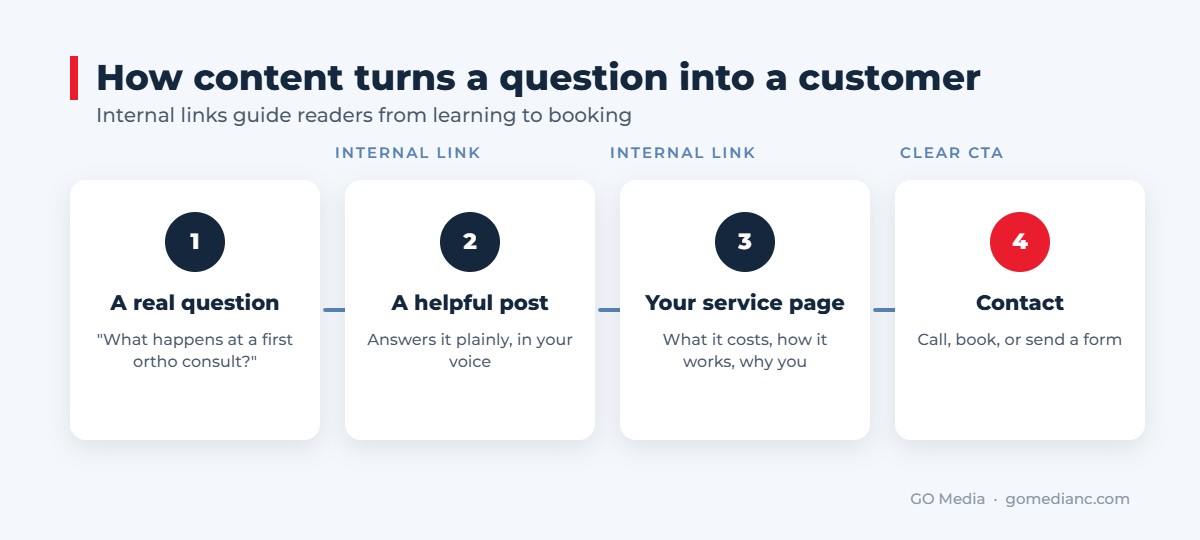
Every time you write a blog post that answers a question, link it to the service page it relates to, and link from that service page back to the post. This is called internal linking, and it does two important things. It helps readers move naturally from learning to taking action, and it helps Google understand which pages on your site matter most and how they relate.
Think of your website as a conversation. A post about “what to expect at your first orthodontic consultation” should lead a reader straight to the page where they can book one, which is the backbone of SEO for orthodontists.
Earn Links and Mentions From Around the Triangle
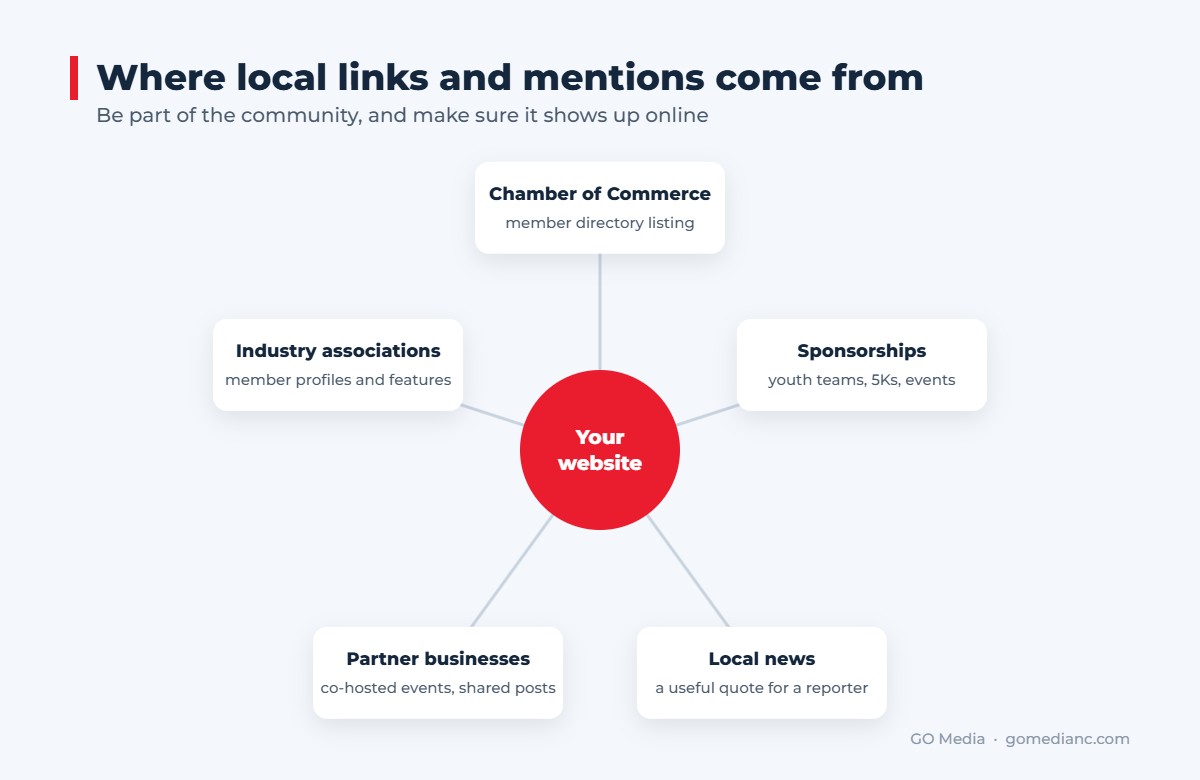
Google treats a link from another website as a vote of confidence. Links from credible local sources, such as the Chamber of Commerce, a community organization you sponsor, which is one of the most durable parts of local SEO, a local news outlet, or an industry association, carry real weight. You don’t get them by asking strangers. You get them by being part of the community and making sure that involvement shows up online.
Sponsor a 5K and ask to be listed on the event page. Host a workshop and let the venue promote it. Offer a local reporter a useful quote on a story in your field. Partner with a complementary business and write about the collaboration on both sites. Each of these builds your authority in a way that’s authentic and hard for competitors to replicate.
Update What You Already Have
Old content isn’t dead content. A post from three years ago that still gets some traffic can often be refreshed with updated details, better answers, and new internal links, and it will frequently climb in rankings faster than a brand-new post would. Before you write something new, look at what’s already on your site and ask what could be made more useful.
Measure What Matters
Page views are nice, but they aren’t the goal. Track which content leads to phone calls, form submissions, and booked appointments. Google Analytics and Search Console will show you which pages bring people in and which searches they came from. Over a few months, patterns emerge. You’ll see which topics your Raleigh customers care about most, and you’ll know exactly what to write next.
How GO Media Builds Content That Works
Content is where our SEO work and our copywriting come together. We start by learning how you talk to customers and what they ask, then we build a plan that covers your service pages, location pages, and the questions worth answering in depth. We write in your voice, ground it in the Raleigh market, connect it with smart internal linking, and help you earn the local mentions that build authority. Then we measure it, so you know which pages are bringing in business.
If your website says a lot but doesn’t seem to say anything your customers are searching for, let’s change that. Reach out to GO Media and we’ll map out the content your Raleigh customers are already looking for.